Stories and Traditions
According to Mythology the first Olive tree was a gift to the city of Athens from the Olympian Goddess Athena. The Goddess Athena and The God Poseidon competed for the name of the ancient city offering gifts to its people. Poseidon offered a spring of salt water and Athena an Olive tree. The Athenian people favored Athena’s gift and named their city after the Goddess.
The cultivation of olive trees and the production of olive oil has been part of our island’s tradition for centuries. Cypriots created a web of myths and traditions, where olive oil has divine and even magical powers to showcase the importance of this valuable product that played such a crucial role in their day-to-day life.


A folklore story
As in many cultures, also in our folklore we have many superstitions and unfounded fears and beliefs. If you feel exhausted, have headaches, dizziness or you experience mental and physical fatigue, then you are matiasmenos (an envious eye was cast upon). You need an expert to perform the xematiasma (to release you from the consequences of the envious eye). For the xematiasma to be successful it must be performed free of charge and the matiasmenos must not say “thank you”.
The Expert fills a small cup with water and a small plate with olive oil and starts the xematiasma with a prayer “in the name of the Father, the Son and the Holy Spirit” followed by the name of the matiasmenos. The Expert then makes the sign of the cross 3 times over the water and every time she prays “Jesus Christ the Almighty who conquers all” and then pours 3 oil drops into the cup of water. If the 3 drops float separately in the cup, then it was a false alarm: the person is not matiasmenos and must seek the cause of his symptoms elsewhere. However, if the three oil drops unit and float as a single drop in the cup then the person is indeed matiasmenos. The Expert proceeds then to repeat 3 times a prayer in the name of Jesus Christ and the Virgin Mary. After the prayers are said and done the matiasmenos will feel much better and the effects of the envious eyes will cease to affect him.
The Experience
October marks the beginning of the Ladia, that is the olive harvest, which lasts until March. Participate in harvesting of the olives and the olive oil extract process. Sit under an ancient olive tree, relax and imagine it’s centuries-old stories. Eat a slice of bread sprinkled with fresh olive oil, salt and oregano and feel its balmy taste. Visit ancient and modern olive oil presses and experience the evolution of the olive oil production through the centuries.
Traditional Olive Presses
Along the Heartland villages, you will come across a number of restored traditional olive presses, which were built usually at church squares or in monasteries. These traditional presses were typically made of stone or wood and used a combination of pressing and grinding to extract the oil from olives. Usually, a heavy mill stone is fitted in a stone basin and is turned to crush the olives. The poult of the crushed olives is then placed in special woven baskets, zembilia, and is placed under heavy stones or in a press to extract every drop of the precious olive oil.
Visiting one of these old olive presses can be a fascinating way to learn about the island’s heritage and traditional methods of olive oil production:
- Lythrodontas Olive Press
- Palaichori Olive Press
- Choirokoitia Olive Press
- Tochni Olive Press
- Kalavasos Olive Press
- Prastio Olive Press
Cypriot Olive oil
Cypriot extra virgin olive oil has a distinctive, fruity aroma and robust flavour, both of which are attributed to the variety of the Cypriot olive tree and the soil conditions. The fruity profile combines the fragrant scents of green tomatoes, artichokes and, in some cases, freshly-cut grass or bitter almonds. On the palate, the taste is slightly bitter with a moderate pungency in the throat and a pleasant aftertaste without any greasy mouthfeel. These desirable characteristics are considered positive indicators of quality and distinction.
Olive Oil and Religion
In the Greek Orthodox religious practice, olive oil symbolizes God’s mercy, serenity and peace. It is a sacred symbol of the cycle of life, it is used in all important moments and rituals, birth, baptism, marriage and death. Olive oil is also used in oil lamps that illuminate our churches, since it produces no soot, which is harmful for the icons and the wall paintings. The faithful consider the oil from these oil lamps as a talisman and help for every difficult moment.
In Cyprus, Palm Sunday is better known as Olive Sunday because in local tradition it has been associated with the olive tree. According to custom, women cut olive branches which they leave in the church for 40 days to be sanctified. The consecrated olive leaves are burned to “smoke” the house and other places, as well as family members, throughout the year as a protection against evil spirits.
Symbolisms and superstitions
The olive branch also symbolizes peace. In the Old Testament, a pigeon brought Noah an olive branch that symbolized the end of the Flood and the return of normality. The United Nations Organization logo depicts two olive branches enveloping the world. Also, the flag of the Republic of Cyprus depicts the shape of the island in a yellow-copper color which is enveloped by two olive branches symbolizing our island’s effort for peace and prosperity.
Ancient olive trees and groves
Ancient trees, which managed to survive throughout the centuries are considered “Monuments of Nature”. Our Forestry Department has identified 115 individual trees and 27 tree groves such monuments. Some of the most important ancient olive trees and groves are:
- 800 years old olive tree in Kyperounta village. It is 5m tall and a perimeter of 8.10m
- 800 years old olive tree in Lefkara village. It is 4m tall and a perimeter of 7.20m
- 700 years old olive tree in Agglisides village. It is 6m tall and a perimeter of 10.35m
- 700 years old olive tree in Avdimou village. It is 5m tall and a perimeter of 8.70m
- 28 olive trees near Germasogeia village
- 43 olive trees near Anogyra village
- and 18 olive trees near Pano Lefkara village.
EXPLORE LOCATIONS BY LEG:
Leg 1
Links to businesses offering the experience

Automata Eleourgia Lithrodonta
Tel: +357 22542773, +357 96660919

Eleotrivia Analionta
Tel: +357 22542138, +357 99910423

(Deftera) Agni’s Olive Mill
Tel: +357 99418771, +357 22623308
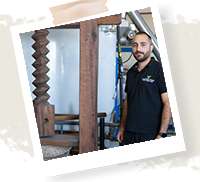
(Peristerona) Eleotrivio Yiangou
Tel: +357 22824555, +357 99445174
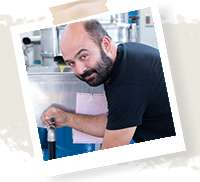
Eleotrivio Pyrinas Klirou
Tel: +357 99478679, +357 99426680

(Akaki) A. Kyprianou Olive Mill
Tel: +357 22822239, +357 99625685

A&S Olive Mill Pera Orinis
Tel: +357 22622781, +357 99651676

(Affiliated Business in Evrichou) Lefkos Petrou Olive Mill
Tel : +357 99559099
Note: The business offering the experience, operate during the “Ladia” period (the olive harvest) from October to March.
More to experience

(Dali) Antros & Fani Dimitriadi
Tel: +357 22521103

(Dali) “Idaliades” Women Association c/o Koulla Zonia
Tel: +357 99678187

(Lythrodontas) small cheese factory Pampoukkas
Tel: +357 99442501

(Lythrodontas) Salomi traditional bakery
Tel: +357 99787118

(Analiontas) “Evexia”
Tel: +357 99144931

(Palaichori), ARTOPOIIA PALAICHORIOU SAVVA MATSI
Tel: +357 22642351
Taste our local flavours
Labeled with “Taste Cyprus” restaurants/taverns nearby:
Accommodation Nearby
LEG 2
Links to businesses offering the experience

(Agglisides) King of Olives Olive Mill, A. Agathokleous Ltd
Tel: +357 99576334

(Affiliated Business in Pano Lefkara) Terra Oliva Organic Olive Farm
Tel: +357 99409223
Note: The business offering the experience, operate during the “Ladia” period (the olive harvest) from October to March.
More to experience

(Skarinou) Golden Donkey Farm
Tel: +357 99790979 or 96894236

(Skarinou) Agios Georgios Farm
Tel: +357 99968483

(Choirokoitia) Mr Petros Nicolaou Traditional Basket Workshop
Tel: +357 99205833
Taste our local flavours
Labeled with “Taste Cyprus” restaurants/taverns nearby:
Agglisides
Tersefanou
Pentakomo
Accommodation Nearby
LEG 3
Links to businesses offering the experience

(Anoyira) Oleastro Olive Park
Tel: +357 99565768, +357 99525093

(Erimi) Pettemerides Olive Mill
Tel: +357 25932233, +357 99488338
Note: The business offering the experience, operate during the “Ladia” period (the olive harvest) from October to March.
More to experience

(Anoyira) family run farm -The Anoyrkatikon
Tel: +357 9433287, +357 99633286

(Anoyira) Pastellopoiio To Paradosiako
Tel: +357 25221500

(Prastio) Christina Constantinou “To Praskitiko”
Tel: +357 99 662730

(Prastio) Niki Onoufriou
Tel: +357 25 221560, +357 99 633127

(Pachna) Salatas Farm
Tel: +357 25 942023, +357 99 679957

(Arsos) To stafyli allos pos
Tel: +357 99559451

(ARSOS) TRADITIONAL BAKERY C/O SIROS AND MIROULA AGAPIOU
Tel: +357 25943029

(Pachna) Giannakis Stefani Dairy Workshop
Tel: +357 99604882, +357 99 411215

(Asgata) Olive Mill Museum
Tel: +357 25632895
Taste our local flavours
Labeled with “Taste Cyprus” restaurants/taverns nearby:
Agia Fyla
Pano Polemidia
Lofou
Omodos
Accommodation Nearby
LEG 4
Links to businesses offering the experience

(Statos-Agios Photios) Stagona Oil
Tel: +357 99683887, +357 97605200

(Drouseia) Koupparis Olive Mill
Tel: +357 99450147

Kritou Marotou Olive Mill
Tel: +357 95124860

(Agia Varvara) Prothierias Olive Mill
Tel: +357 26422100

(Timi) Andreas Kanaris Olive Mill
Tel: +357 26422855, +357 99473167
Note: The business offering the experience, operate during the “Ladia” period (the olive harvest) from October to March.
More to experience

(STATOS-AGIOS PHOTIOS) AVACAS WINERY
Tel: +357 99632562

(Statos-Agios Photios) Cold Cuts c/o Costas Charalampous
Tel: +357 26722242

(Statos-Agios Photios) Iconography c/o Myrianthi Constantinou
Tel: +357 99420130, +357 26722057

(Statos- Agios Photios) Androula`s Traditional Products c/o Elena Antoniou
Tel: +357 99562532

(Agia Varvara) Aglafill Fish c/o Valerios Kesides
Tel: +357 99028731, +357 96493636

(Drouseia) Dairy workshops “Drouseia”
Tel: +357 99257560